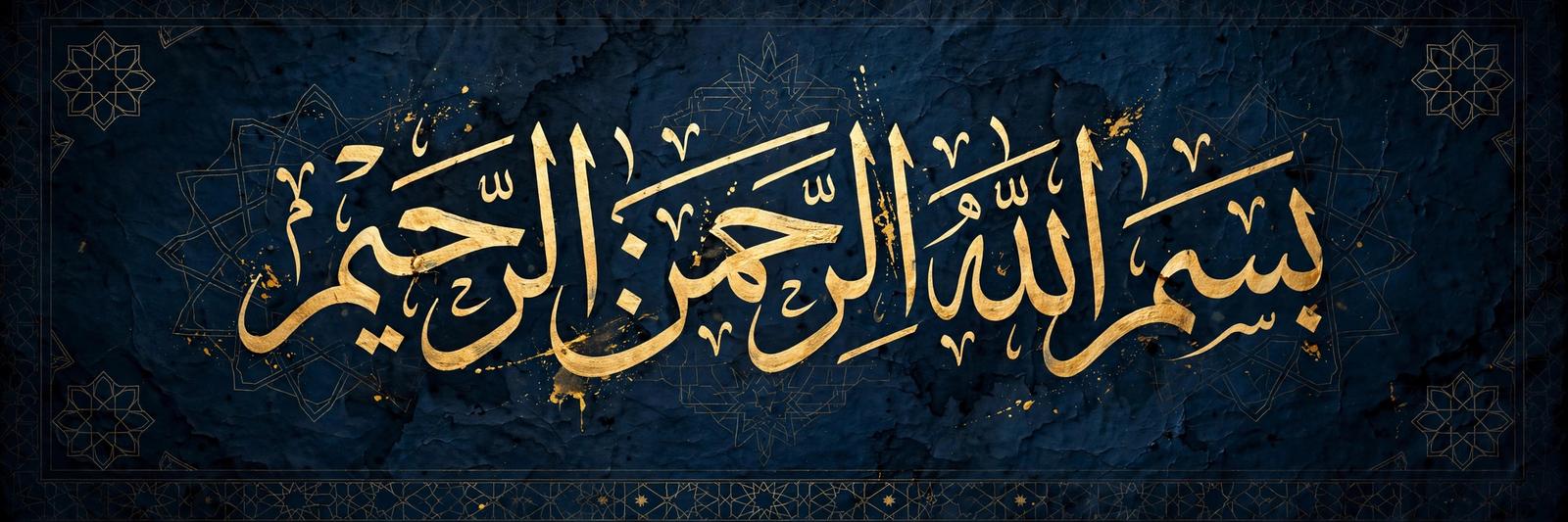
Every day, millions of Muslims recite the Quran in prayer without understanding a single word of it. If that describes you, you're not alone — and the fix is simpler than you think. When you learn Arabic to understand Quran, even partially, your salah changes: verses you have repeated for years suddenly speak to you directly, without a translation in between.
Why Learn Arabic to Understand the Quran?
Translations of the Quran are a mercy — but every translator will tell you that something is always lost. Arabic words often carry three or four layers of meaning that English must flatten into one. When you learn Arabic to understand Quran directly, you experience the difference yourself: the rhythm, the word choices, the emphasis — all of it was deliberate.
Consider the very first word revealed: ٱقْرَأْ (Iqra — "Read!"). In English it's a command; in Arabic it's the beginning of a relationship with knowledge itself. That depth is why so many Muslims, young and old, decide to learn Arabic to understand Quran recitation instead of only decoding its letters.
There is also a practical joy in it. The moment you recognize your first word in salah — "Wait, I know what that means!" — prayer stops being a ritual you perform and becomes a conversation you participate in. That single moment is worth every week of study, and it usually arrives much earlier than beginners expect.
Quranic Arabic vs Conversational Arabic: Honest Differences
One of the first questions every beginner asks: should I learn the Arabic people speak, or the Arabic of the Quran? Here's the honest answer.
Conversational Arabic (Modern Standard Arabic, plus regional dialects) is the language of daily life — greetings, shopping, news, school. If your goal is to chat with Arab friends or travel, this is your target.
Quranic Arabic is classical Arabic — about 1,400 years old. Its vocabulary is more precise, its grammar more consistent, and its style unmatched. It is not a separate language; it is the ancestor of the Arabic spoken today. Roughly 80% of Quranic vocabulary overlaps with modern Arabic, so the two reinforce each other instead of competing.
Here's what we tell our own students honestly: learn them together. If your main goal is to learn Arabic to understand Quran, begin the high-frequency vocabulary track early — you don't have to wait until you're fluent in conversation. Build your foundation in Modern Standard Arabic (speaking, reading, writing) and weave in high-frequency Quranic vocabulary from early on. That way you can hold a conversation and follow the meaning of the verses you recite. Choosing only one is like learning to read but never to speak — or the reverse.
The Alphabet and the Root-Word System
Arabic has 28 letters, written right to left. Most beginners master the alphabet in 1–3 months of steady practice. But the real magic of Arabic isn't the alphabet — it's the root system.
Nearly every Arabic word grows from a three-letter root. Learn one root and you unlock a whole family of words. The classic example is ك-ت-ب (k-t-b), connected to writing:
- كِتَاب (kitāb) — book
- كَاتِب (kātib) — writer
- مَكْتَبَة (maktaba) — library
- كَتَبَ (kataba) — he wrote
This is why people who learn Arabic to understand Quran often progress faster than they expect: the Quran reuses the same roots constantly. This frequency effect is the biggest shortcut for anyone who sets out to learn Arabic to understand Quran: a small set of roots unlocks most of what you will ever read. The 1,000 most frequent Quranic words cover roughly 70% of the Quran's vocabulary — and most of them share a few hundred roots. Learn the roots, and the Quran starts opening itself to you.
"Guide us along the Straight Path" (Al-Fatihah 1:6) — a verse every Muslim recites daily. Imagine understanding every word of it.
Sarf and Nahw, Explained Simply
Two words scare every beginner: Sarf and Nahw. They sound like advanced university subjects. They aren't — they're just the two halves of how Arabic works.
Sarf (صَرْف) is word-building: how roots grow into words through patterns. It's the system behind the k-t-b family above. Once you see the patterns, new words stop feeling random — you can often guess a word's meaning from its shape. This is the single most powerful tool for anyone who wants to learn Arabic to understand Quran, because the Quran is built on these patterns.
Nahw (نَحْو) is sentence grammar: how words join to say who did what to whom. Arabic marks this with tiny vowel endings, which is why two sentences with the same words can mean different things. The good news: you don't need to memorize grammar tables first. Learn Nahw through real verses and sentences, and the rules stick because you've already felt them working.
Master these two gradually, and your ability to learn Arabic to understand Quran accelerates — you start decoding unfamiliar verses instead of only recognizing familiar ones. Our advice: don't study Sarf and Nahw as theory before you can read. Learn the alphabet, start reading simple texts, and let a teacher introduce one pattern at a time with examples you already know.
Learn Arabic to Understand Quran: Your Step-by-Step Beginner Path
This is the same roadmap we use with students who come to us specifically to learn Arabic to understand Quran. Here is the honest roadmap we give our own students. Timelines assume 2–3 live classes per week plus light daily practice:
Step 1 — The alphabet (1–3 months)
All 28 letters, correct pronunciation (makharij — where each sound comes from), joining letters, and short vowels. Goal: read any pointed Arabic text slowly but correctly. Our free alphabet guide is a good start.
Step 2 — Reading fluency + first vocabulary (3–6 months)
Read words and short sentences smoothly. Learn 300+ everyday words — and start the high-frequency Quranic words (the ones that appear hundreds of times, like رَبّ, هُدًى, صِرَاط).
Step 3 — Conversation + practical grammar (6–12 months)
Speak about daily life in Modern Standard Arabic while Nahw is introduced through examples. Goal: basic conversations and reading simple texts with understanding.
Step 4 — Quranic Arabic focus (12–18 months)
The 1,000 most frequent Quranic words in frequency order, Sarf patterns made visual, and guided reading of short surahs with understanding. This is where students who learn Arabic to understand Quran reach their most rewarding milestone: following the meaning of recitation in real time.
"The best time to start was years ago. The second-best time is today — with a teacher, not an app." — our advice to every beginner
Common Mistakes to Avoid
- Only memorizing vocabulary lists. Words without roots and sentences fade in weeks. Learn words inside verses and conversations.
- Skipping pronunciation. Arabic has sounds English doesn't (ع، ح، ق). Wrong makharij become bad habits that are painful to unlearn — a live tutor corrects you from day one.
- Studying grammar before reading. Nahw rules mean nothing until you've read sentences. Read first, then let grammar explain what you already sense.
- Expecting fluency in 30 days. Anyone promising this is selling, not teaching. Honest timelines are in months — and every month compounds.
- Learning alone with apps. Apps are fine for review, but nobody ever learned to understand the Quran from a streak counter — and students who try to learn Arabic to understand Quran alone usually stall at the grammar stage. Conversation and correction need a human.
How 1-on-1 Classes Speed This Up
If your goal is to learn Arabic to understand Quran rather than only to chat, a tutor also keeps you on the frequency-ordered vocabulary track instead of drifting into random topics. Pronunciation, the root system, and grammar patterns all need feedback — someone who hears your ع and fixes it before it fossilizes, who notices which patterns click for you and which need another example. That's what live 1-on-1 classes give you.
At ArabiPro, native tutors teach the full path above — alphabet to Quranic Arabic — in live sessions over Zoom, WhatsApp video, or Google Meet, with male and female teachers and timings that fit your timezone. If you're unsure where to start, the 3-day free trial includes a proper level assessment: your tutor tells you honestly which step to begin at.
You can also read our Arabic learning FAQs — including whether to learn Arabic to understand the Quran, how long each stage takes, and what Sarf and Nahw really involve.
Quick FAQ
Can I learn Arabic to understand Quran as an adult beginner?
Yes — most of our Quranic Arabic students are adults, including new Muslims and busy parents. The beginner path above was designed for exactly this.
Do I need to learn conversational Arabic too?
Not strictly — but it helps enormously. Modern Standard Arabic shares most of its vocabulary and grammar with Quranic Arabic, so speaking practice accelerates your Quran understanding rather than distracting from it.
How many words do I need to understand most of the Quran?
The 1,000 most frequent words cover roughly 70% of Quranic vocabulary. Because of the root system, those 1,000 words come from only a few hundred roots — very achievable in 12–18 months of steady study.
Is a female teacher available for sisters?
Yes — we have qualified female Arabic teachers (native speakers, certified). Just request one when booking.
Begin Your Journey Today
To learn Arabic to understand Quran is one of the most rewarding decisions a Muslim can make — and it starts with a single free class. Message us on WhatsApp at +92 306 5015322 and we'll schedule your 3-day free trial with a native tutor: no card, no obligation, just your first real step toward understanding the words you pray with. 🌙